
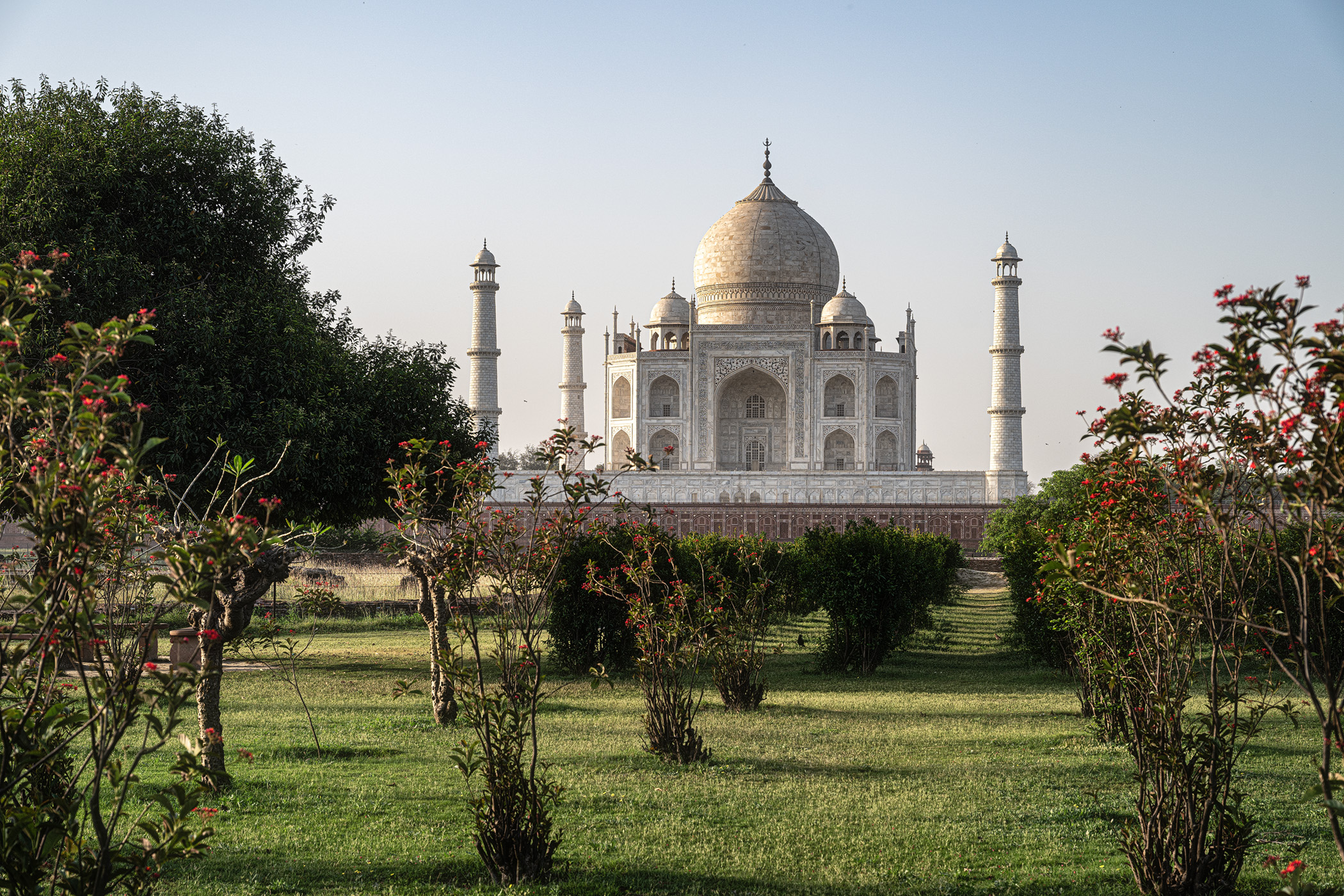
What a difficult country India! Together with beautiful things you may find some extreme situations; but always smiling people (mainly busy performing religious rites or honking while driving – sorry, just kidding).
I went on a small journey (compared to the size of the country) in the North, Delhi, Rajasthan and the like. It is difficult to summarize so contrasting feelings – I cut it short and publish what I shot and as usual: enjoy!
My group of visited places (identified at my best – might not be sufficient, sorry):
- Jama Masjid
- Fatehpuri Masjid
- Taj Mahal
- Ibadat Khana Fatehpur Sikri
- Amber Fort
- The City Palace of Jaipur and Jantar Mantar (astronomical instruments site)
- The Monkey Temple in Galta, Jaipur
- Fior di Loto Free Women School
- Pushkar Lake
- Ajaypal Temple (near Ajmer)
- Jodhpur (the Blue City) and Toorji Ka Jhalra Bavdi (Ancient Stepwell)
- Mehrangarh Fort and Jaswant Thada (memorial)
- Mandore Gardens
- People of India
- Children of India
- Miscellanea
What follows is the text that you find at the entrance of the Gardens that are in front of Taj Mahal, on the other side of the river (as you might have noticed, some of the above photos (four) have been shot from that spot).
I copied it for those who are interested in such kind of things (this implies that the copyright – or whatever right there is – is not mine):
“The Mahtab-Bagh (the moon garden) (1631-1635 A.D.)
Babur (reign, 1526-30 a.d.) came to Agra soon after the battle of Panipat (20 April 1526). Here, he was much tortured by heat, hot winds and dust. He has also complained, in his memoirs, of the lack of running water (through canals and cascades) and gardens with which he was accustomed and had seen a large number of them at Samarqand, such as Bagh-i-Dilkusha, Bagh-i-Chenar and Bagh–Bihisht. he had founded several gardens at Kabul: Bagh-i-Vafa, Bagh-Kalan, Bagh-i-Banafsha, Bagh-i-Padshahi and Bagh-i-Chenar. It was in this tradition that he founded gardens on the left (eastern) bank of the river Jamuna at Agra, e.g. Bagh-i-Gul afshan (the flower-scattering garden) (present Ram-Bagh); Bagh-i-Zar-Afshan (the gold scattering garden) (present Chauburj); and Bagh-i-Hasht Bihisht (the garden of eight paradises), as he has recorded in his memoirs. He noted that his nobles also founded gardens here, so much so that “the people of hind who had never seen grounds planned so symmetrically and thus laid out, called the side of the jun (river Jamuna) where (our) residences were, Kabul.” His record shows that his Bagh-i- Hasht Bihisht was situated just in front of the Agra fort, most probably, at or near this place,enabling him to cross the river and reach here swiftly and frequently. The ughals were certainly occupying this area and, to cater to their religious needs, Humayun (reign, 1530-40; 1555) built a large mosque in this locality. This mosque has survived and bears the inscription dated in A.H. 937/1530 A.D. his astronomical observatory, now in ruins and known as ‘Gyarah-Siddi’, is also situated in its vicinity. The area has large scale ruins of Mughal gardens. Later, Akbar (1556-1605) seems to have granted this place, on both sides of the river, in Jagir, to Raja man Ssingh Kachhwaha of Amer, whereby the village came to be known as ‘Kachhpura’.
Shah Jeham (1628-1658), Akbar’s grandson, procured this site (on both banks of the river) for building a magnificent tomb in the memory of his deceased queen Mumtaz Mahal, from man Singh’s grandson Mirza Raja Jai Singh, in lieu of four ‘havelis’, as is on record. the grand mausoleum, viz. the Taj Mahal with subsidiary buildings, chowk (court), dalans, gateway and spacious garden was laid out, on three receding levels, on the right bank, the stupendous main tomb of white marble standing imposingly on the edge of the river. He also built this spacious garden, viz. the Mahtab-Bagh on the tradition of garden-craft founded by Babur, on this side of the river, facing the Taj Mahal, just to provide a beautiful backdrop to the main tomb. It was ingeniously planned on one plain level. first, a large octagonal tank of brick masonry, each internal side of which measured 26.70 m (appro. 80 feet), was built. Each side had 16 scalloped arches, to make up a beautiful border of the tank. On south, west, north and east sides were spacious bunglas (pavilions with curved chhajjas and roofs) which were interconnected by wide dalans or covered corridors, on other sides. All these were built of red sandstone, and engrailed (cusped) arches, pillars, carved panels and other architectural parts of this vast structure, in typical shahjehanian style, have survived in the ruins. There were 25 fountains in the tank. These were inlets of water which was supplied by overhead tanks through water-tight terracotta pipes, which have all disappeared. On its northern side is an oblong red stone tank, with scalloped corners. Water from the main octagonal tank flowed, through a slit under the northern bungla, and fell into this oblong tank in the form of a water-fall (abshar), behind whiich a chini-khanah (series of niches for candles in the night, and flower guldastas in the day) is provided. A large char-Bagh (four-quartered garden) was laid out on its northern side. It was divided into four quarters, with a square lotus-tank in the centre. It also has scalloped corners. Shallow stone canals, with stone-paved pathways on both sides, now extinct, were built from this central tank to the middle of the four sides. Water flowed from the main tank to the oblong tank and thence to the canals of this garden. There were barahdaris (open, arcaded pavillions) on the western, northern and eastern sides of the char-Bagh. These too have been destroyed. The enclosing wall has also disappeared and only its river-side, south-eastern tower has remained. Aurangzeb, in his letter dated 8 Muharram 1063 Hijri (=9 december 1652 A.D.), mentioned Mahtab-Bagh and noted that it was recently submerged under flood water. But the octagonal tank and bunglas had remained unaffected. In the later ages, the buildings collapsed and the garden was covered by sand deposited by river floods, and it was forgotten. The Archaeological Survey of India, has excavated it and it is now being restored and conserved. nearly 8000 trees and plants from the Mughal repertoire have been planted by the A.S.I.
The Mahtab-Bagh is laid out in perfect symmetry and alignment with the Taj Mahal, and there is absolutely no doubt that it was planned and built as an integral part of the original design of the taj mahal, during the period from 1631 to 1635 a.d. It seems to have been named ‘Mahtab-Bagh’ (the moon garden) because it is an ideal place for viewing the Taj Mahal in moonlight.”
So be it.
The City Palace of Jaipur and Jantar Mantar (astronomical instruments site)
The Monkey Temple in Galta, Jaipur
Fior di Loto Free Woman School
Jodhpur (The Blue City) and Toorji Ka Jhalra Bavdi (Ancient Stepwell)
Mehrangarh Fort And Jaswant Thada (memorial)
Thanks to Paolo Vimercati and Foto-Corsi school, to whom I am grateful, a sound reality in the italian travel agencies business that organizes tours especially designed for photographers.
