
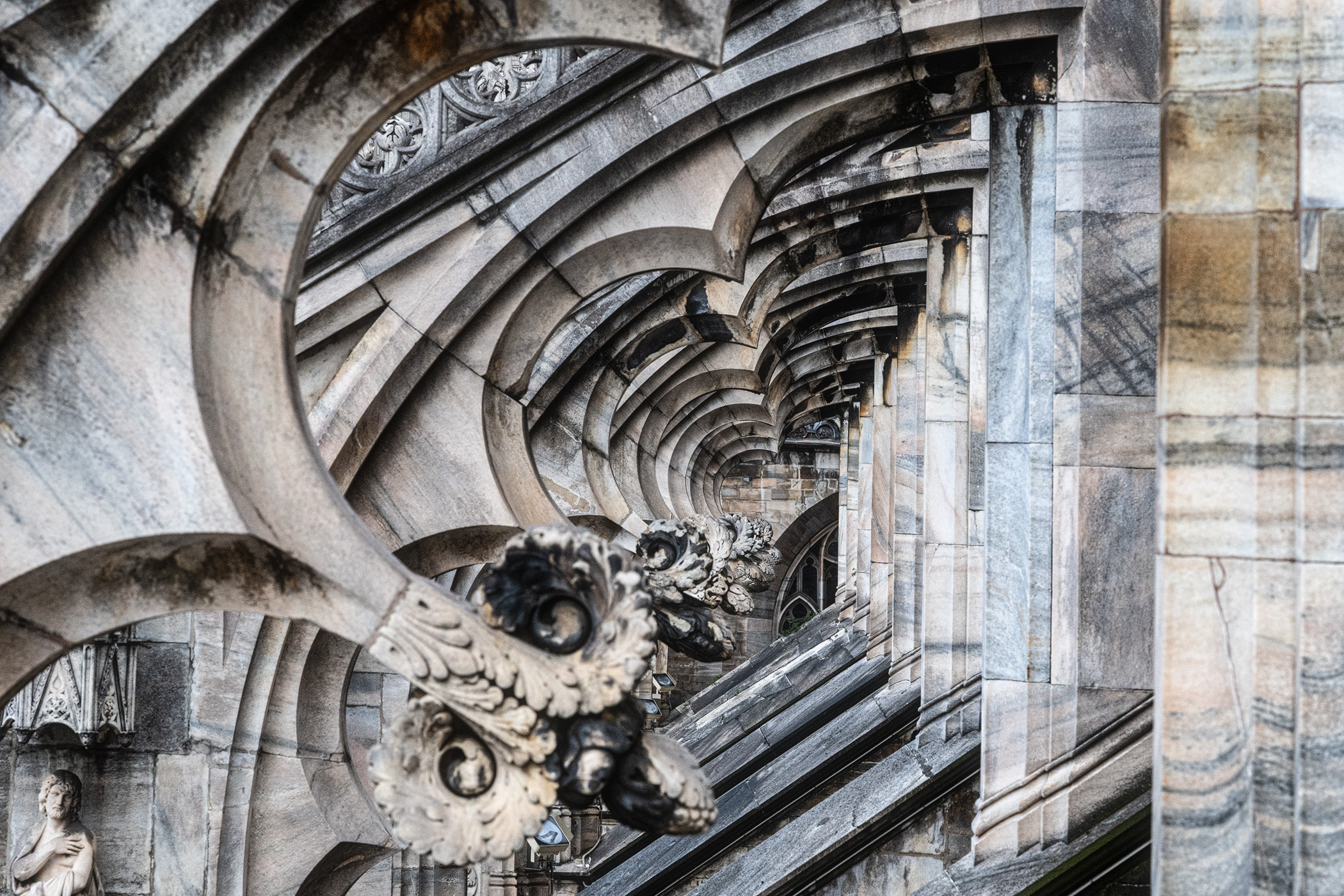
Here I am in Milano, in the North of Italy. A brief but intense journey in what is called the financial capital of Italy.
A list of the main sites and museums I visited in this journey:
- Il Duomo
- Galleria Vittorio Emanuele II
- Basilica di San Lorenzo Maggiore
- Basilica di Santa Maria delle Grazie (e Cenacolo Vinciano)
- Basilica di Santa Maria dei Miracoli
- Basilica di Sant’Ambrogio
- Basilica di Santo Stefano Maggiore
- Basilica di San Bernardino alle Ossa (with the Ossario)
- Chiesa di Santa Maria presso San Satiro
- Pinacoteca Brera
- Pinacoteca Ambrosiana
- Museum of Science and Technology
- Castello Sforzesco
- Natural History Museum
- Miscellanea
Basilica di San Lorenzo Maggiore
Basilica di Santa Maria delle Grazie (e Cenacolo Vinciano)
Basilica di Santa Maria del Miracoli
Basilica di Santo Stefano Maggiore
Basilica di San Bernardino alle Ossa
Museum of Science and Technology
Conte Biancamano Transatlantic
“The Conte Biancamano is the last Italian transatlantic liner built abroad. It was commissioned in the 1920s by the Lloyd Sabaudo to the Scottish Beardmore&Co. shipyards and was thought for a clientele accustomed to all comforts.
The interior design was assigned to Adolfo Coppedé, one of the most famous and appreciated Italian architects of that period. After 15 years of sailing to North and South America, when WWII broke out, it was requisitioned by the United States army to transport troops. The interiors were dismantled and it was renamed “Hermitage”. When the war ended, it was returned to Italy and brought to the Monfalcone (Gorizia) shipyards to be refurnished.
The main halls were assigned to ten different artists, among which the painters Massimo Campigli and Mario Sironi and the sculptor Marcello Mascherini. Giò Ponti, in charge of the furniture wrote: “the Conte Biancamano, with its procession of halls, shows the sign of different characters: this makes the ship varied”.
These exclusive collaborations and their exceptional result contributed to the uniqueness of the Biancamano.” (this text appears in the exhibition and is © of the Museum).
